


The Strategic Edge: Why Modern Time and Attendance Systems are Essential for Growth

In the fast-paced world of the 2026 UK economy, the difference between a business that’s just getting by and one that’s truly thriving usually comes down to one thing: how well it manages its most expensive asset—time.

For years, many British firms treated time tracking as a boring back-office chore—collecting paper timesheets and just hoping for the best. But as work life has shifted toward hybrid models and legal rules have tightened, that old "pen and paper" approach has become a massive liability. Today, professional time and attendance systems have evolved into strategic tools that boost productivity, keep you legal, and protect your hard-earned profits.
Closing the "Honesty Gap"
Even in the most loyal teams, manual time tracking suffers from what we call "the honesty gap." It’s rarely about people being sneaky; it’s just human nature. When someone fills out their timesheet on a Friday afternoon, they don’t remember being four minutes late on Tuesday or leaving ten minutes early on Wednesday. They just round it off to the nearest block of time.
This "rounding culture" is a silent drain on your budget. If 20 employees each round their time by just 10 minutes a day, you’re paying for over 800 hours of unworked time every year. A digital system records time to the exact second, making sure payroll is a 100% accurate reflection of actual work.
Navigating the UK’s Compliance Maze
The UK regulatory scene in 2026 is unforgiving. Between the Working Time Regulations (which handle maximum hours and mandatory breaks) and the strict documentation needed for the National Minimum Wage, the admin burden on managers is heavy.
If you ever face an HMRC audit or an employment tribunal, a "gut feeling" or a messy spreadsheet won't save you. Professional systems provide an unshakeable, digital audit trail. They automatically flag when someone is hitting their legal hour limit or missing a mandatory break. By automating these checks, the system acts like an "always-on" compliance officer, protecting you from huge fines and a bruised reputation.
Tools for the Real World
One of the best things about modern time and attendance systems is that they aren't "one size fits all." The best system is the one that fits your specific daily rhythm:
Biometric Terminals: In places where hygiene is key (like food prep or healthcare) or where you want to stop "buddy punching" (clocking in for a friend), facial recognition is the gold standard. It’s fast, secure, and totally contactless.

Proximity and RFID: For busy spots like warehouses or shops, a quick tap of a card or fob lets staff move through entrances fast during shift changes.
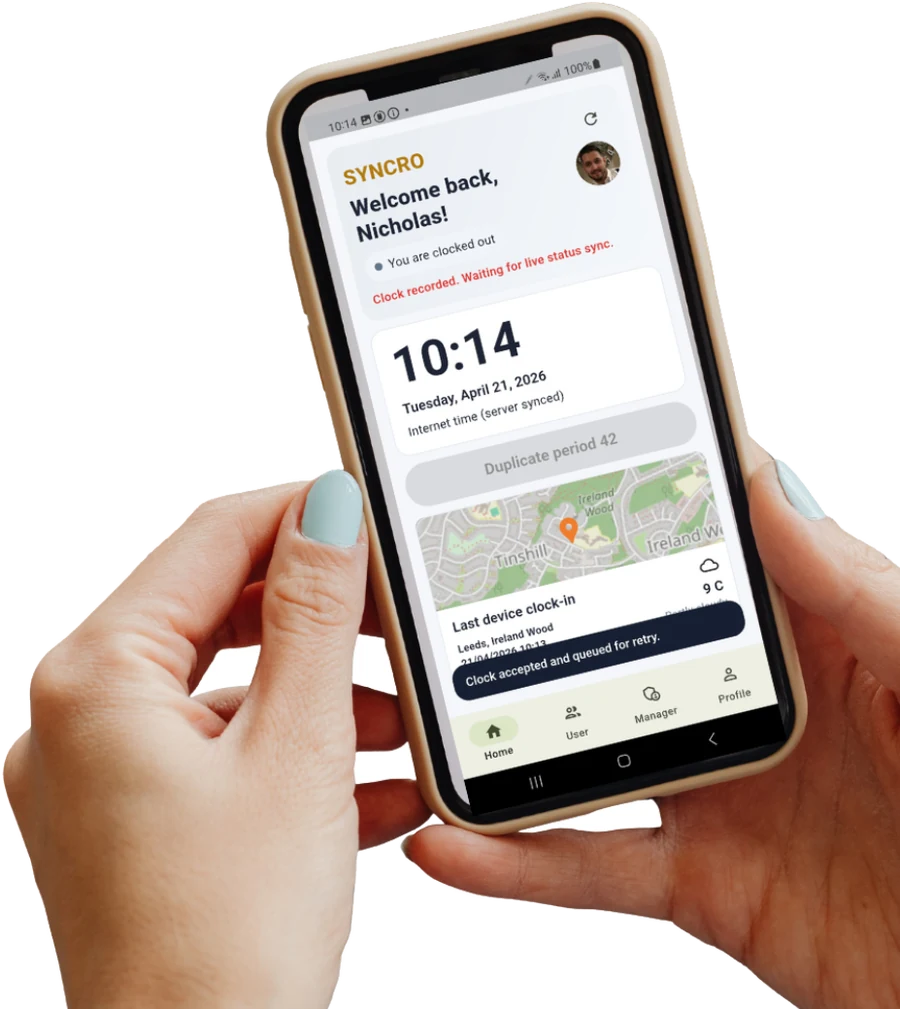
Mobile and GPS: For the modern mobile workforce—field engineers, home-care workers, or remote staff—the system lives on their phone. GPS geofencing makes sure "clocking in" only happens when they are actually at the job site.
From Clock to Bank: Seamless Integration
The real "win" isn't the gadget on the wall; it’s the data flow. The soul-destroying task of manually typing attendance numbers into payroll software like Sage, Xero, or QuickBooks is officially a thing of the past.
Modern systems bridge this gap completely. Data is automatically formatted and pushed into your payroll suite, wiping out typos and slashing admin time by up to 80%. This ensures everyone is paid correctly and on time, which is the #1 factor for keeping team morale high.
Fairness Over "Big Brother"
A common worry is that a clocking systems signals a lack of trust. In reality, the opposite is usually true. High-performing employees love precision. They want to know that their extra effort—like staying 20 minutes late to finish a project—is officially recognized and rewarded.
A transparent system removes favoritism. It moves the workplace away from "management impressions" and toward objective facts. When everyone i
s treated according to the same unshakeable record, disputes over hours and overtime virtually disappear.
Conclusion: Making Every Second Count
As we look at the future of the UK workforce, the demand for flexibility and accuracy is only going to grow. Implementing a professional time and attendance system isn’t just an admin upgrade; it’s an investment in your company’s ability to grow.
By replacing guesswork with precision, you get your mental energy back. You stop firefighting payroll errors and start focusing on the big-picture growth of your business.


Comments